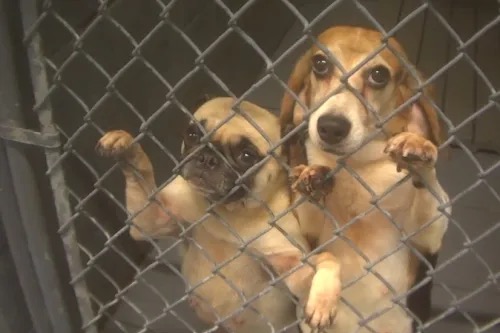
If your dog gets loose and is picked up by a member of the public, animal control, or the police, where do they go? How long will the shelter keep them? And how do you get them back?
The most important thing to know is: don’t delay.
What happens next depends on where you live, but here’s what you can generally expect.
First, the Shelter Will Try to Identify Your Dog
When a stray dog arrives at a shelter, staff will usually scan for a microchip and look for identification such as a license or rabies tag.
This is one of the biggest reasons to microchip and license your dog, and keep your microchip information up to date.
If the shelter can identify you, they can try to contact you. In some states, having identification can also affect how long the shelter must hold your dog.
Without identification, hold periods vary widely from state to state. Most state laws that establish holding periods give owners somewhere between three and five days, but some are shorter or longer.
Pennsylvania is a good example of why the details matter. An unlicensed impounded dog may have a 48-hour holding period, excluding days when the kennel is closed to the public. Licensed dogs are subject to different notice and holding requirements.
You can check the Animal Legal & Historical Center’s nationwide chart of state shelter holding periods to see what your state requires.
How Do You Know Which Shelter Has Your Dog?
Let’s assume you haven’t received a call.
If you already know which shelter accepts stray animals in your community, start there.
If you don’t know, or if your dog went missing somewhere unfamiliar, call the local police non-emergency number. They should be able to tell you where stray dogs from that jurisdiction are taken.
And remember that dogs don’t know jurisdictional boundaries. If you live near another city or county, check neighboring shelters too.
You can also search for your lost pet through Petco Love Lost, which helps connect lost and found pets with shelters, rescues and people in the community.
What Happens to Your Dog During the Hold Period?
While your dog is being held, they will generally stay in a shelter kennel, receive food and water, and be monitored by shelter staff.
Where veterinary staff are available, a dog may also receive an initial health assessment. If your dog is sick or injured, the shelter may provide necessary treatment or arrange for veterinary care.
The purpose of the holding period is to give you a chance to find and reclaim your dog before the shelter can make another placement decision.
What Do You Need to Get Your Dog Back?
You found your dog. Yay!
The shelter may ask you to show that the dog actually belongs to you.
That could include:
- Photos of you with your dog
- Veterinary records
- Adoption records
- License information
- Microchip registration
There may also be reclaim or impound fees depending on your local rules.
Once the shelter is satisfied that you are the owner and you meet any applicable reclaim requirements, you should be able to take your dog home.
What Happens If You Don't Get There in Time?
This is why knowing the hold period matters.
Once the legally required holding period has expired, the shelter may be permitted to make the dog available for adoption, transfer the dog to another organization, or make other placement decisions allowed under state law and shelter policy.
If you appear after the holding period, the shelter may still be able and willing to return your dog if they are still there, but you should never assume they are legally required to keep waiting for you.
So if your dog is missing, start checking shelters immediately.
Call your local shelter and animal control agency, check neighboring jurisdictions, and search Petco Love Lost for lost and found pets in your area.
And if your dog is home with you right now, take five minutes today to check their microchip registration and make sure your phone number and address are current.
That small step could make a very big difference if they ever get lost.