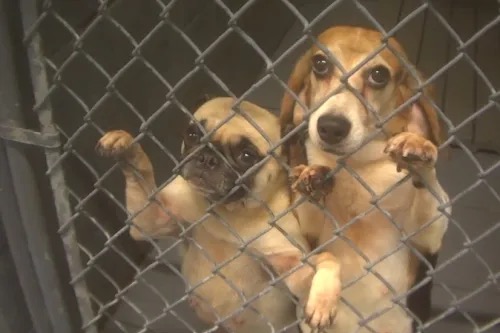
If you’ve ever thought about fostering a dog and then stopped yourself because “I’d get too attached,” Kelly Motter wants you to reconsider that objection.
Fostering can be emotional. You bring a dog into your home, help them feel safe, learn their personality, watch them change, and then eventually say goodbye.
But that goodbye can also mean the dog has found the right permanent home, and another dog now has a foster home available.
Kelly Motter fosters dogs and hosts The Foster Files, a podcast about animal rescue and welfare. In this episode of The Animal Advocate, she joins Penny Ellison to talk honestly about what fostering a dog is really like, how to decide whether fostering is right for you, and what prospective foster families should ask before choosing a rescue organization.
And one of Kelly’s biggest pieces of advice may surprise you:
Don’t think of fostering as a rescue interviewing you. You should be interviewing the rescue, too.
Foster homes are desperately needed. That gives prospective fosters the ability to look for an organization that will provide the support they need.
Not ready to foster but still want to help animals in your community? Read Getting Started as an Animal Shelter Volunteer for ways to put your time and skills to work for animals.
In this episode, you’ll learn
-
How to decide whether fostering a dog is right for you
-
Why getting attached to a foster dog doesn’t mean you shouldn’t foster
-
How foster homes expand the number of animals shelters and rescues can help
-
Why foster families can provide valuable information about how a dog behaves in a home
-
What questions you should ask a rescue before agreeing to foster
-
What a good foster support system should look like
-
What to do if a foster dog isn’t a good fit for your household
-
Why one bad experience with a rescue doesn’t mean fostering isn’t right for you
-
How photos, videos, descriptions and other marketing can help foster dogs get adopted
-
How rescues can address common concerns and recruit more foster homes
Key Takeaway
You’re not just applying to become a foster. You’re interviewing the rescue, too.
Ask what happens if the dog isn’t working out in your household. Ask who pays for and coordinates medical care. Ask what happens if you meet a potential adopter who doesn’t seem like the right fit. Ask how much support you’ll receive throughout the process.
Rescues need foster homes, and not every rescue operates the same way. Finding an organization that supports its fosters can make the difference between a frustrating experience and one that you want to repeat again and again.
And if the only thing stopping you from fostering is the fear that you’ll get too attached, Kelly offers another way to look at it: foster families get attached, too. They love the dogs in their homes. They simply decide that the temporary heartbreak of saying goodbye is worth giving another animal a chance.
Episode Highlights
03:02 Kelly shares how she finally decided to start fostering dogs after thinking about it for years.
05:01 The most rewarding part of fostering: watching a frightened or uncertain dog begin to feel safe, play and show their personality.
07:48 “I’d get too attached.” Kelly explains why she has started challenging one of the most common reasons people give for not fostering.
11:16 Helping animals doesn’t have to mean fostering or walking dogs. Kelly and Penny discuss how professional skills like communications, data, fundraising and social media can all help shelters and rescues.
15:35 Dogs need marketing, too. Kelly explains how good descriptions, photos and videos can help potential adopters fall in love with a foster dog — and why honesty about the dog’s challenges matters just as much.
20:24 Penny explains two of the most important things foster homes provide: additional lifesaving capacity and information about what a dog is actually like in a home.
21:49 What happens if you meet a potential adopter and know they aren’t the right fit for your foster dog? Ask the rescue how they handle that situation before you foster.
22:43 Kelly discusses what rescues can do to recruit more foster homes by addressing prospective fosters’ concerns upfront.
24:54 Interview the rescue. Kelly shares the questions prospective fosters should ask about medical care, household conflicts, adoption decisions and ongoing support.
25:44 Had a bad fostering experience? Try another organization. Different rescues can provide very different levels of communication and support.
27:47 Penny’s takeaway: foster homes are one of the biggest constraints on how many animals a rescue can help — and prospective fosters have more power to choose the right organization than they may realize.
Resources Mentioned
-
The Foster Files — Kelly Motter’s podcast about animal rescue, fostering and animal welfare
-
Getting Started as an Animal Shelter Volunteer — How to begin volunteering and find a role that matches your skills and interests
-
Petfinder — Search for adoptable dogs and rescue organizations in your area
Not Sure You Can Foster? You Can Still Help.
Fostering is one of the most direct ways to help shelters and rescues increase their capacity, but it isn’t right for every household.
Maybe you have resident animals whose needs make fostering difficult. Maybe your schedule doesn’t allow it. Or maybe bringing another animal into your home simply isn’t realistic right now.
That doesn’t mean you have nothing to offer.
Shelters and rescues need people with skills in communications, photography, social media, fundraising, administration, data, transportation and countless other areas.
If you want to help but aren’t sure where to begin, start with Getting Started as an Animal Shelter Volunteer.
You may already have exactly the skill a local organization needs.
Related Episodes
Beyond Dog Walking: How to Help Animal Shelters in Ways They Actually Need
Shelters need help you can give without training, orientations or a set schedule — if you know what to offer.
Why Can’t Animal Shelters Save Every Animal?
Why even shelters with strong outcomes face limits on capacity — and what individuals can do to help.
How to Help Animal Shelters on Social Media: Do’s and Don’ts from Shelter Staff
How to use social media in ways that support shelter animals and staff instead of making their jobs harder.
Transcript
Penny Ellison [00:00:00 – 00:01:07]
If you ever thought about fostering an animal and then talked yourself out of it, there’s a good chance that one of your reasons was that you thought you’d get too attached, that it would just break your heart to give them up. It’s understandable, but my guest today turns that argument around in a way that never occurred to me before. And once she said it, it completely changed what I thought when I heard “I’d get too attached.”
Welcome to The Animal Advocate, where we arm animal lovers with the information and inspiration you need to become effective advocates. I’m your host, Penny Ellison, and I’ve taught animal law and advocacy at the University of Pennsylvania since 2006. If you’ve ever thought someone should do something about that, I’m here to guide you on your journey to being that someone. You can find us on the web at animaladvocacyacademy.com, and that’s where you’ll find show notes and resources, and you can send us your comments on episodes and ideas for topics you’d like to hear on future shows.
Penny Ellison [00:01:09 – 00:02:29]
So, on to today’s topic. Kelly Motter fosters dogs and hosts The Foster Files, a podcast about animal rescue and welfare. She also has a background in sales, which turns out to be surprisingly useful in fostering. Dogs need marketing too, especially foster dogs who aren’t sitting in a shelter where potential adopters can see them.
Kelly and I talk about what fostering really asks of you, what it doesn’t, and something that I don’t think prospective fosters hear often enough. You’re not just trying to get approved by a rescue. You should be interviewing the rescue too, ’cause you’re a hot commodity. We talk about how to tell a well-run rescue from one that’s likely to leave you on your own, what to ask before you agree to foster, and why one bad experience doesn’t mean fostering isn’t for you.
And if you’re on the rescue side, we get into the other half of the equation. How do you get more people to say yes to fostering? If you’ve been thinking about fostering but haven’t quite gotten there, this conversation may change how you think about it. Here’s my conversation with Kelly, with a guest appearance by my dog Kona.
Welcome, Kelly Motter, to The Animal Advocate.
Kelly Motter [00:02:30 – 00:02:36]
Thank you so much for having me. I’m so glad we finally had an opportunity to nail this down. I’m so excited to be here.
Penny Ellison [00:02:37 – 00:03:00]
I’m excited too, because I think there are a lot of people out there that think about fostering, that could foster, but they have a lot of questions and they have a lot of trepidation about what it might mean. So I think that’s what I want to focus on, at least in the beginning with you, is to tell us how you got involved in fostering. Um, I guess just let’s start there.
Kelly Motter [00:03:02 – 00:04:01]
So I have kind of always had it in the back of my mind that I might want to foster. Um, and actually it even goes beyond just animals, in kind of the process of figuring out that I was going to be a childfree-by-choice person. I thought about— I never, to me, in potentially having kids, it never felt like I needed to have my own children biologically. So I’ve even thought about, you know, fostering and adopting children. So that’s kind of always been something that’s sort of been in the back of my mind.
But, um, for about 8 years, my husband and I, we had 5 resident dogs. And fostering in that capacity just is— feels very impossible. It was always kind of maintaining the balance of the pack to begin with. I mean, nobody was aggressive towards anybody, but it’s 5 very different personalities that you’re trying to make sure everybody’s copacetic. And then we lost a couple of our dogs in 2022, and then we lost others in 2024. And it just really felt like the house really felt empty.
Penny Ellison [00:04:02 – 00:04:02]
Mm-hmm.
Kelly Motter [00:04:02 – 00:04:53]
Like it was so quiet. Like even going from 5 dogs to 4, you’re like, oh my God, it’s so quiet in here. And so I really just, um, you know, being on social media perpetually, for better or for worse, I was getting a lot of, you know, this dog is going to be put down, and this dog needs a foster, and this dog needs adopted. And so it just really felt like it was time.
We have the space and we have the setup in our home. We have the flexibility of our schedules. We are childfree, so we don’t have that, you know, kind of that extra added schedule demand of children that for us would be a little bit of a challenge. So I just said to Michael, I was like, hey, how do you feel about fostering? I really want to give it a shot and see how it goes. And fortunately he said yes, and we haven’t really looked back. It’s been quite the journey for sure.
Penny Ellison [00:04:54 – 00:04:59]
And what are some of the highlights and what are some of the lessons learned that you’d like to share with people?
Kelly Motter [00:05:01 – 00:06:04]
So for sure, the highlight is the same with every single dog. Every single dog that has come in here has a level of trepidation or a level of fear. I mean, it’s very rare. I mean, only if you’re getting a brand new puppy, like a super, super young puppy, do you get a dog that doesn’t have something going on. So whether it’s they’re scared of new people or they’re scared of this environment or they’re, you know, potentially a really big flight risk, whatever that is, there’s always something.
And when you watch these dogs come out of their shells and start to like play and start to get comfortable and start to meet new people and start to play with you and start to play with your dogs, it is like— I mean, that feeling, that rewarding feeling is like— I can’t describe it. Just knowing that you have provided them a safe space where they can be themselves and they can just be a dog is just like, I mean, my God.
Penny Ellison [00:06:04 – 00:06:05]
That first tail wag, you’re saying.
Kelly Motter [00:06:06 – 00:07:33]
Oh my God, it’s, it’s, it’s— I’ll tell you one very quick story. We had a dog that came in that was not doing well in his current foster. He’s a super high-energy dog and he’s a little bit on the bigger side. And I mean, I’m talking like boxer energy, bouncing off of walls. So his foster at the time said, we are not the best fit for this dog, we really need help. We had just gotten rid of our foster— not gotten rid of, excuse me, adopted out our foster a week prior. And I said, you know what, we’re in a good place, we can take him. And plus, we have a big fenced-in yard. We’re an active family. We can take him.
And when he first came into my kitchen, I mean, he was tail tucked, ears flat. He was terrified. I mean, he watched his other foster pull out like, what is happening? And so I just sat on the kitchen floor with him. And I think I sat there for about half an hour. And then— there’s a picture of it— he finally literally just collapsed his whole head and body into me, and I just started crying.
I was like, oh my God, this dog just needs to feel safe and loved. And now he is in the best home with an equally energetic dog, that at the meet and greet they were playing for like an hour. So that’s what I was going to say is like the second most rewarding thing is like putting them in these perfect homes where you just watch, then get to continue through pictures and videos and social media posts, continue to see them thrive. It’s like, oh, it’s just amazing. It’s incredible.
Penny Ellison [00:07:33 – 00:07:47]
And you gave him that ticket to a second chance. But I think that the inverse of that is the objection that I always hear, is how I’m going to feel when I have to hand that dog off to somebody else. What if I’m attached and it breaks my heart?
Kelly Motter [00:07:48 – 00:09:44]
Right. It’s so funny because in the last, specifically the last year, because I’ve been doing this podcast for, you know, like 50, I think I have 54 episodes now. So a little over a year. And really, in this last year, I have really analyzed that statement, and it’s now getting to the point where I kind of take issue with it.
And the reason that I say that is because if we can really kind of dissect what that person is saying— and they don’t mean it, and I don’t think they think about it this deeply— but really what they’re saying is, I am so unwilling to miss this dog that I’m okay with it potentially otherwise being euthanized. And I know that that sounds very harsh and that sounds very critical, but ultimately, at the end of the day, that’s the deal that someone is making when they have that as their only objection to fostering.
There are many other reasons why fostering is not going to work for certain individuals and certain families, and I could lay all of those out. But to say that the only reason that you wouldn’t foster this dog temporarily is because you don’t want to see it go to another home, then you’re kind of just turning a blind eye to the fact that somewhere around 400,000 dogs are potentially going to be euthanized in 2026. And that’s the reality of the shelter situation in the United States. And unfortunately, I think the number might actually be up over 2025 when we actually look at the data, because of the way that the cost of living has changed and inflation has changed disposable income for so many people.
So I really challenge people to think about what they really are saying when that’s the reason that they’re telling themselves that they can’t foster, because it’s so much bigger than just that moment of, you know, some discomfort that you might have in this animal is now going somewhere else. I also would say that saying that to fosters, it kind of cuts us a little bit.
Penny Ellison [00:09:45 – 00:09:55]
And it does sound harsh, but what you’re telling them is you have to put something else in the forefront of your mind. It can’t be you and your feelings. It has to be the animal.
Kelly Motter [00:09:56 – 00:10:05]
Right, but what I mean is that, like, I think when people say, oh, I could never give them up, I would just love them too much, is kind of a soft implication that maybe we don’t love them.
Penny Ellison [00:10:05 – 00:10:06]
Oh, I see what you mean.
Kelly Motter [00:10:06 – 00:10:33]
And so, right, and so, like, what I’m saying is that that idea that we can foster because we somehow don’t love them as much as you potentially would is so not even close to reality. We love every single foster that comes into our house, and some are easier to say goodbye to because of different things and different behaviors or whatever, don’t get me wrong, but we love every single dog that comes into our home.
Penny Ellison [00:10:33 – 00:11:15]
And you know what? That sounds exactly like— because the other thing we need people to do, as you point out, with more and more animals getting surrendered to shelters because of economic reasons, because of housing reasons, we need more and more people to want to volunteer in shelters. And I think the same sentiment comes out to say, well, I couldn’t volunteer because it would break my heart.
And we have to just, I guess, start thinking about the animals. And also, like, I think when you do volunteer, 90% of the time it makes you feel great. Even if, you know, if there are 100 dogs in the kennel tonight and you took out 5, you can say, well, I made those 5 have a much better night than they otherwise would have. And, you know, that’s where your focus has to be.
Kelly Motter [00:11:16 – 00:12:55]
Right. And also too, and I talk about this a lot on the podcast, is volunteering doesn’t necessarily mean being in the shelter every day. I encourage people that are, you know, like you, for example, you are an attorney and you might have, you know, in the past been like, how do I have a skill that is associated with animal rescue and welfare? Where clearly you have a massive skill set to help out in that space.
You know, my background is in sales. What is my skill set? Well, my skill set is communication, right? Like, I love talking to people, and I love— so that’s part of the reason I started the podcast. And also, you know, I’ve had dogs my entire life, and I feel like I have a skill set of making dogs feel safe and getting them to the point where they can be, you know, adopted out.
But maybe someone’s skill set is in data. Maybe someone’s skill set is in social media management. Maybe someone’s skill set is just that they like to do chores. Some people just like to clean. My little sister is like that. God bless her OCD, every time I see her, my car is cleaner than before I saw her. So, you know, maybe that’s your skill set. And so maybe you take your skill set and you take your interests, and you’re not doing direct one-on-one, you know, seeing these dogs in a shelter. Maybe you’re contributing in a different way. Maybe you’re a great fundraiser, you know.
Maybe, you know, I think that there’s just other ways that you can look at it where you can really kind of take that surface-level objection and kind of reach past it just a little bit to find a way that you can still contribute to, you know, ultimately the massive problem we have in the United States.
Penny Ellison [00:12:56 – 00:13:14]
100%. And I did an episode on all the different ways that you can volunteer other than walking dogs, so I’ll drop a link to that in the show notes. But you’ve also mentioned your podcast, and I want to put a link to that in the show notes, and that’s called The Foster Files. And, uh, tell me what motivated you to start that.
Kelly Motter [00:13:15 – 00:15:10]
So when I told my friends, I’ll never forget, I was at like a, um— we have a friend that homebrews beer and he had like a beer event where he was doing tastings. And I was saying to my friends, guys, you know, I’ve decided I’m gonna foster dogs. And everybody goes like, okay, we know that, makes sense to us. It sounds like a natural progression for you. We’re not surprised. You’re going to be amazing. So it was just so funny how not surprised they were by that, because in your mind you’re, like, making this big decision and then your friends are like, yeah, that tracks.
So then kind of in the fostering and in talking about what I’ve been learning and what I’ve been doing as a foster, you know, I had one friend in particular, my friend Morgan. He said, you got to find a way to scale that. He’s like, you’re so passionate about it and you’re so articulate in speaking about it. You got to find a way to do more with that. And so I kind of just sat with that for a little bit, and I was like, what does that even look like? I’m not sure what that looks like. And then I said, well, wait a minute, there’s no gatekeeping in podcasting. You can literally just get a mic on Facebook Marketplace, which is what I did. You can Google how to do things, which is what I did. And then you can post stuff, which is what I did.
And so for me, it was just a way to say I’m passionate about educating about animal welfare in general, because the subtitle to my podcast is Stories About Animal Rescue and Welfare. And so I don’t just talk about fostering. I don’t just talk about dogs and companion animals. I talk about animal rescue and welfare in general. And I am a very naturally curious person. So I really like learning about all these things that I didn’t know about, even the things that make me uncomfortable. And so I just really found that this was a way for me to take that energy of wanting to talk to everybody and kind of making sure that my friends don’t have to hear it all the time.
Penny Ellison [00:15:12 – 00:15:14]
Well, I can identify with that. Yes.
Kelly Motter [00:15:14 – 00:15:15]
Right.
Penny Ellison [00:15:15 – 00:15:34]
I’m thinking about what you said about, well, you’re good at sales, you’re good at like sales and marketing, which sounds like a great thing you could teach other people, whether they’re fostering or volunteering. Like, you know, animals need good marketing people. So have you found that those skills come into play as a foster parent and as somebody who advises people?
Kelly Motter [00:15:35 – 00:16:50]
Absolutely. I think writing a great description and even just posting the right videos on social media— I mean, I have had people that are interested in a dog and then they see my Instagram handle where I say, hey, for more videos of this dog, you know, find my Instagram. I’ve had people go, oh my gosh, I fell in love with this dog via the videos and via the pictures that you put up. So yeah, absolutely. I think to say that dogs don’t need marketing, I think would be kind of really naive. And so I have found that to be a really good thing.
But I will say that it also is wildly important for— and I think shelters know this and rescues know this, and I think it’s important for fosters to learn this— that when you are talking to a specific individual about a specific animal, that you are giving them the good and the bad, and you are letting them know, hey— you know, the foster that I have behind me right now, she’s not housebroken yet. It would be a real disservice to not disclose that to a potential adopter, right? Because if I don’t disclose that and then she does have an accident in the house, which she’s probably gonna do, that’s all the more reason for them to say, well, this isn’t what I expected it to be. I’d like to return that dog.
Penny Ellison [00:16:50 – 00:17:11]
For sure. Because, you know, that has a couple of negative effects, which is, you know, of course that dog might come back to you or back to the shelter, which, you know, the dog’s already been through a lot of trauma. So that’s sort of more trauma. And it also might turn those people off from adopting. They might say, well, you know, the dogs you get from shelters and rescues, you know, they have issues. I’m gonna buy from a breeder.
Kelly Motter [00:17:12 – 00:18:24]
Right. Which is so wild to me because there’s a multitude of issues that you can get from a breeder. And for those who are listening, I’m using air quotes super intentionally because, you know, I think most of what we see online, while it can look legitimate and it can look like a quote-unquote really nice, great facility, um, it’s backyard breeding. It’s contributing to the crisis. A lot of these dogs aren’t coming health tested, um, with genetic testing, and it’s really kind of just contributing to the problem.
And there’s no such thing as a perfect dog. I mean, there’s a reason that some of these purebred dogs, well-bred dogs, you know, fail being service dogs, because they’re sentient beings. They have their own personalities. So this idea that you’re going to get a, you know, perfect puppy just because it’s quote-unquote from a breeder and doesn’t quote-unquote have any trauma— it’s just, I don’t know, I think it’s just, like I said, naive. You know, there’s no such thing as a perfect puppy. You’re going to have to put in the time. You’re going to have to hope that this puppy and this animal has some great personality traits and some great things and not any known issues. But then also you’re going to have to put in the work.
Penny Ellison [00:18:26 – 00:18:38]
And is that some of what you tell people who say, well, yeah, I want to adopt, but I really want a specific breed puppy and there aren’t any? What do you say to people like that?
Kelly Motter [00:18:39 – 00:18:55]
Oh, I literally just pull up Petfinder and I just Google the breed. And I would say that a lot of people— not a lot, I can’t really speak for everybody, but in my experience, people who are looking for a specific breed, what they’re really looking for is this—
Penny Ellison [00:18:55 – 00:19:01]
Yes, yes, yes. That is what we need to tell people to focus on. If you’re thinking, right, you need a dog that’ll be good with your kids. Yeah, go ahead.
Kelly Motter [00:19:02 – 00:20:24]
Right. And so it’s so funny to me because there’s no breeder that is going to have the amount of information on the temperament of a dog that its foster does. Like, I know all the ins and outs of this dog that is barking and wreaking havoc behind me. I’m with her every day. She has my focused attention. I can tell you up and down how this dog is gonna act. And breeders just don’t have that. One, they don’t have the time. These are babies, they’re puppies, so they don’t have it really developed, their personality. And usually there’s like a litter, and then there’s the mom they have to— and then whatever that situation is.
So if you are looking for appropriate temperament, um, I would say maybe not a shelter-specific rescue, right? Because dogs act different in the shelter, and shelter workers are stretched thin as it is. But find a shelter that works with fosters, or find a foster-based rescue. And we get those requests at the rescue I work with all the time. We’re looking for a dog that is approximately this and is good with kids and is good with a cat and, you know, acts like this or whatever. And we put out an APB in the chat that says, hey, do anybody’s fosters meet this criteria? And then we literally will help the person select the dog. I mean, where are you getting that from? A breeder? So it’s really an opportunity in the foster system.
Penny Ellison [00:20:24 – 00:20:56]
You know, the 2 most important contributions that fosters make to the animal welfare system is, of course, number one, they expand capacity. So, you know, you have a lot more spots for animals. And 2, what you just said, is they supply that information of what is this dog like in a home. So if you are a person who has a child who has a cat, you can go to a foster-based rescue and say, who do you have that’s living with a child and a cat? And they’ll usually have one.
Kelly Motter [00:20:57 – 00:21:42]
Yeah, absolutely. I mean, I’ve had a scenario in which I had a meet and greet come to the house to meet my foster, and I’ve told this story before, and she— it was not a good fit. And I could tell this person was not going to thrive with this dog, and this dog was not going to thrive with this person. Now, mind you, she was a great applicant. It was clear she loved her previous dogs. It was clear she had an incredible property. All those things were clear to me, but it was not the right fit for this dog. And I told her that.
I said, I do not see this being a successful placement. I want to connect you with the rescue and put you in touch with a dog that’s going to be a much better fit for you. And luckily, she did end up adopting from our organization.
Penny Ellison [00:21:42 – 00:21:48]
I think that might be one of the things that would scare off fosters, is to say, what if I meet someone who I don’t think is a good fit?
Kelly Motter [00:21:49 – 00:22:12]
The organization that I work with, they’ll say, if you feel like it’s not a good fit, you just tell them, okay, the rescue will be in touch, and then we’ll let them know. So, you know, if you’re concerned about fostering and what that looks like, just ask the organization outright, what if I have somebody that’s not a good fit? How is that going to be handled? Is it going to be handled by me or is it going to be handled by the rescue? And find a rescue that’s going to handle it for you.
Penny Ellison [00:22:13 – 00:22:33]
That is a good question, because I was thinking that maybe the best thing to leave people with is advice for potential fosters, but also advice for rescues. Because I mean, I saw as of 2 hours ago a local rescue for senior animals saying, we are just being inundated with requests to take animals, but we can’t take any more until more fosters step up.
Kelly Motter [00:22:33 – 00:22:33]
Right.
Penny Ellison [00:22:34 – 00:22:43]
So I guess what advice would you give rescues to try to recruit—
Kelly Motter [00:22:43 – 00:23:53]
Oh, that’s a tough one. Um, because in the 2 years I’ve been fostering, I’ve recruited one foster.
Penny Ellison [00:22:49 – 00:22:50]
Yeah.
Kelly Motter [00:22:50 – 00:23:53]
Um, and it’s a close friend of mine, and that’s great. I would say, um, maybe one of the things that our rescue is looking to do is they’re looking to maybe hold potential foster information nights, where people can come and ask questions about what it means to foster.
I would say that a rescue should maybe post some of the assumed barriers that, you know, somebody might have. Like, for example, there are a lot of people who think that because they don’t have a fenced-in yard, they’ll get declined for adopting or declined for fostering. And while that might be the case for some rescues, it’s certainly not the case for all of them. So maybe post like, you don’t need a fenced-in yard. We’re gonna handle all the medical. This is the support level that you get. Maybe let somebody know that if it’s not working, you can bring the dog back to us, you know?
And I think that that’s something that could be a barrier for people. Oh my God, what if this doesn’t work out in my house? What if they say that this dog is cat-friendly and then it tries to eat my cat?
Penny Ellison [00:23:54 – 00:23:54]
Right.
Kelly Motter [00:23:54 – 00:25:22]
You know, what am I gonna do here? And so maybe for a rescue— (here’s my foster right now)— uh, maybe for a rescue to just really hit those— that’s the thing about sales, hit the objections head-on, um, as opposed to letting people kind of walk away not having said their objection. Just say it. I know what you’re thinking. I know what you feel like your objection is. Here’s how we can overcome that objection together.
Um, and then my advice for people that are considering fostering is find an organization you feel like you connect with. I think that, um, first of all, there’s no shortage of need for fosters. So if you’re considering fostering, you are a hot commodity. Trust me, we need fosters, we need loving homes. So you have your pick. Interview the organization, make sure it’s a good fit, ask questions. If you reach out to them and they’re not getting back to you— now, first of all, have some grace. They’re all volunteers.
Penny Ellison [00:24:54 – 00:24:54]
Right.
Kelly Motter [00:24:54 – 00:25:22]
But if ultimately you feel like they’re not responding to you in a way that you feel like is appropriate for your expectations, move on. Go to another organization, right? Ask them questions. You know, what does the support system look like? What if my dog has a medical issue? What if the animal is not getting along in my household? What are the steps then? You know, do I get any decision-making in the adoption process? Is that something that’s important to you? Interview the rescues. Interview. You’re a hot commodity.
Penny Ellison [00:25:23 – 00:25:43]
I think that is the best advice I’ve heard, and it’s different than I have heard before, which is, you know, view yourself as a hot commodity because the rescues are competing for you. And there are rescues that will provide you with more support than other rescues, let’s say, in terms of promoting the animal and helping you find a home.
Kelly Motter [00:25:44 – 00:26:46]
Right. I mean, you know, I’ve heard the good and the bad of it. And I would say too that if you do foster— and I’ve said this on the podcast— if you do foster with an organization and you have a bad experience, go to another one. Because all experiences are not going to be equal. Please don’t give up on the situation, right? Try to handle it with grace and try to handle it with some forgiveness, because every organization is struggling to a degree. But go to another one, go to a different organization, find the one that’s the right fit for you.
I have a friend that just joined fostering, and the organization she was gonna foster with kind of wasn’t letting her know when she was gonna get a dog. And I sort of knew that, and I said, hey, we really have a dog that needs to be placed right now. Are you available? And she was like, yep. And we had that done by the end of the day. Um, but that was also— she had me as a resource, and it was a little bit different, but she was like, hey, you guys need the help. They haven’t gotten back to me, so I’m gonna help them. And it’s not a knock on that organization. They might be dealing with other things we don’t know about, but she was open, and this dog really needed a place to go.
Penny Ellison [00:26:49 – 00:27:01]
That’s great advice, Kelly, and I really appreciate you coming on the show, and I appreciate everything you do, because I know fostering is a contribution that not many people are willing to make. So I appreciate your doing it yourself and educating other people.
Kelly Motter [00:27:02 – 00:27:46]
Thank you. You know, they say like in mental health that one of the best ways that you can heal yourself is to help somebody else. And so if people are maybe not your jam right now, things are a little bit sketchy these days, turn to animals, because they need a lot of help right now.
And so I encourage everybody to look into fostering in their own community, find an organization that they really connect with, and certainly, um, listen to the podcast if you want a little bit more advice. Feel free to connect with me. I’d be happy to answer any further questions somebody might have. My email is thefosterfilespodcast@gmail.com. I read all my emails. I’m a one-man show over here, so please feel free to connect.
Penny Ellison [00:27:47 – 00:29:57]
That’s great, and I think people may take you up on that. So thanks a lot, Kelly.
One thing Kelly said that I hope prospective fosters hear loud and clear is this: you are a hot commodity. Rescues need fosters. It’s usually the constraint that means that they can’t take on another animal. So you get to ask questions. Who handles it if an adopter isn’t the right fit? What happens if the dog isn’t working out in your house? Rescues aren’t all the same, and one bad fostering experience doesn’t tell you what the next one will be like.
But the thing I’ve kept thinking about most is what Kelly said about getting too attached. “I could never foster because I’d get too attached” sounds like a statement about how much you care about animals. Kelly asks us to turn that around. There are people who get just as attached and foster anyway, knowing that letting the dog go is going to hurt. That’s a harder way to think about it. I also think it’s a useful one.
I’ll put a link to The Foster Files in the show notes, along with my earlier episode about all the ways that you can volunteer with animals that don’t involve just walking dogs.
And for today’s Be the Change, you don’t have to commit to fostering. Just find one foster-based rescue near you and send them an email asking what kind of support they provide. That’s it. Asking the question doesn’t sign you up for anything. But it might be the first step toward helping a dog who just needs somewhere to crash for a while.
Penny Ellison [00:29:57 – 00:30:24]
That’s it for today. The Animal Advocate podcast is brought to you by the Animal Advocacy Academy. You can find episodes and show notes at animaladvocacyacademy.com, along with a link to our Facebook and LinkedIn pages, where we discuss our podcasts, and we’d love to discuss your thoughts and experiences there. If you’re interested in learning more about protecting animals, subscribe to the show so you get every episode when it comes out.
If you have any questions on this or any other topic related to animal law, email them to podcast@animaladvocacyacademy.com, and we’ll make sure to get them answered. We’ll either email you back or feature them in a future episode, or both. And remember, compassion is great, but compassionate action is infinitely better. Until next week, live with compassion.
Resources Mentioned
- The Horrible Hundred report, Humane World for Animals
- Humane World for Animals, Stopping Puppy Mills
- Victoria's Law in PA
- The Four C's of Legislative Advocacy for Animals (free audio series)
Related Episodes:
Designer Dogs, Shelter Dogs, and the Small Shift That Would Save Lives
Unlicensed Breeding and Shelter Overcrowding: A Novel Legislative Approach
Bad Dog Breeders: Spot Them to Stop Them
That's it for today. The Animal Advocate is brought to you by the Animal Advocacy Academy. If today's episode got you thinking about what you can do to change things for animals, I want to make sure you know about the four Cs of legislative advocacy for animals. It's a free audio series I put together that gives you a real framework for making legislation happen. You can find it at animaladvocacyacademy.com/fourcs. and you can find all our episodes and show notes at animal advocacyacademy.com. Subscribe so you don't miss an episode, and if you know another animal advocate who should be listening, send this one their way. Questions on today's topic or anything else, just email us at podcast@animaladvocacyacademy.com. We'll write back, or we'll feature your question in a future episode.
Remember, compassion is great, but compassionate action is infinitely better. Until next week, Live with Compassion.