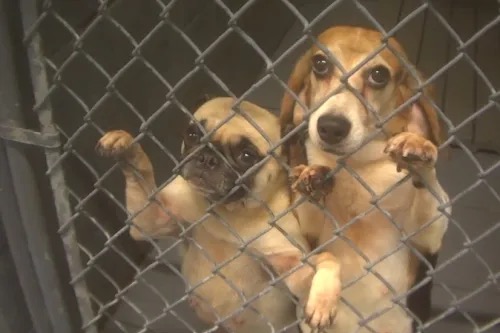
When most people decide to get a dog, they start with a picture in their head — a breed, a look, a particular idea of what the dog at the end of the leash should be. That picture is filling America's shelters. Hundreds of thousands of adoptable dogs are euthanized for space every year, not because they're sick or dangerous, but because the buyers who could have chosen them chose a specific breed of puppy instead.
In this episode, Penny Ellison walks through the math of a problem the animal welfare community rarely talks about directly. The dogs dying in shelters for space aren't dying because Americans don't love dogs. They're dying because of how we choose dogs, and a surprisingly small shift in buyer behavior would eliminate the need to euthanize dogs for space entirely.
The episode takes on the uncomfortable parts of the conversation: why "kill shelters" is the wrong frame, why a specific breed or look shapes so many buying decisions, and what the research on dog acquisition reveals about status, identity, and the predictability myth. It also takes on a quieter version of the same problem inside the adoption movement itself, asking what the word "rescue" actually means when popular dogs get adopted in hours and harder-to-place dogs wait for months.
In this episode, you’ll learn:
-
- Why "kill shelters" is the wrong frame, and who is really making the choices that fill the kennels
- The difference between legitimate reasons to buy from a responsible breeder and the status-driven purchases that fill shelters
- What the research on dog acquisition says about appearance, status, and the hidden role of identity in breed selection
- Why the predictability people think they're buying in a breeder puppy is often more reliably found in an adult shelter dog
- The specific math: how a shift of roughly 1 in 6 to 1 in 10 buyers becoming adopters would end killing for space
- Why the word "rescue" has gotten muddy, and what it should mean
- The dogs who need advocates to choose them on purpose, because nobody else is coming
- The one conversation that matters more than any campaign
Key Takeaway
The dogs dying in our shelters for space aren't dying because Americans don't love dogs. They're dying because of how we choose, and that is something we can change.
Episode Highlights
00:00 The Adoptable Dog Contradiction: Penny Ellison opens with the core problem—breeder demand vs. shelter dog deaths
01:42 The Numbers No One Wants to Face: Real data from Philadelphia and across the country on shelter euthanasia and breeding rates
03:23 Surplus vs. Precious: The Choice Problem: How our consumer approach has created “surplus” dogs and left others waiting months—or dying—for homes
04:49 Why People Really Choose Puppies and Breeds: Breaking down legitimate special needs vs. consumer-driven choices for looks and age
06:08 Dogs as Property—And the Consequences: The legal framework that reinforces the consumer mentality in dog acquisition
06:53 The Status Symbol Dog: How French bulldogs, doodles, and Instagram trends perpetuate the problem
07:48 The Myth of Predictability: Why the belief that breed guarantees temperament is often wrong, and how adult shelter dogs may be a better bet
09:02 What Rescue Should Really Mean: Defining rescue as saving a dog truly in need—not just adopting any puppy with a waiting list
11:04 Who Really Needs You?: The overlooked long-term shelter residents and why advocates must seek them out
12:08 The Achievable Math of Saving Lives: Penny Ellison shows that if just 1 in 10 buyers became adopters, shelter deaths-for-space could end
13:47 Why Slogans Don’t Change Behavior: The limits of “adopt, don’t shop” messaging and the need for real, one-on-one conversations
15:05 Be the Change Challenge: Your homework—have a real conversation with one person who trusts you and is considering getting a dog
Transcript
Welcome back to The Animal Advocate. I want to start today with something that's been on my mind, and honestly on my heart, for a while now. It's a contradiction many people in animal welfare feel but don't always say out loud because we don't want to offend people. And it's this:
People keep buying dogs. So breeders keep breeding them. And the dogs nobody chose die in shelter euthanasia rooms.
Most people assume that if a dog in a shelter is healthy and adoptable, they'll find a home. That assumption doesn't match what's happening in shelters in many areas of this country today. I want to walk you through why, what the real math of this problem looks like, and what it would take to change it.
Welcome to The Animal Advocate, where we arm animal lovers with the information and inspiration you need to become effective advocates. I'm your host, Penny Ellison, and I've taught animal law and advocacy at the University of Pennsylvania since 2006. If you've ever thought “someone should do something about that,” I'm here to guide you on your journey to being that someone. You can find us on the web at animaladvocacyacademy.com, and that's where you'll find show notes and resources. You can send us your comments on episodes and ideas for topics you'd like to hear on future shows. So onto today's topic.
A few weeks ago, I was at the Pennsylvania SPCA shelter here in Philadelphia, and they were housing 317 animals, 191 of them dogs. Many of those dogs had been sitting in kennels for months. Months. Waiting for someone to come in and choose them.
A mile away, Philadelphia's open-intake shelter euthanized more than 70 dogs the previous month. For many, if not most, of those dogs, it was not because they were irredeemably suffering. Not because they were dangerous. And not for lack of effort. The staff were promoting them, sharing them, transferring them to rescues whenever possible. But the influx never stops, and eventually there's just no more room.
And that's just two shelters in one city.
Across the country last year, shelters reported euthanizing approximately 334,000 dogs. That number comes from Shelter Animals Count, which is the best source we have. But reporting is voluntary, so it's safe to assume the real number is higher. We just don't know how much higher.
At the same time, the supply of dogs coming into the market from breeders is enormous. Large-scale commercial breeding operations alone produce somewhere between two and two and a half million puppies every year. That doesn't include small breeders or breeders working under state licensing thresholds, or private sales between individuals. Those categories combined produce many more.
So this isn't a marginal source of dogs. It's one of the dominant ones.
Which is why I keep coming back to the same uncomfortable thought. We've built a system in which some dogs are treated as precious while others become surplus. Some people wait months for a chance to buy the perfect puppy. Some dogs wait months to find out if anyone will choose them at all. That's not a shelter problem. That's a choice problem. And the choice isn't the shelter's. It's ours.
Look, some dogs are brought into homes with abundant resources, high-quality veterinary care, every possible comfort. Others are left to languish or die in shelters. Not because they're sick or unsafe. Not because they wouldn't make great companions. But because the line of dogs coming in never ends. And often, if we're honest, it's because they don't look like the dog people think they want.
Let's pause on that for a minute, because this is where the conversation gets a little uncomfortable, and I don't want to skip over the uncomfortable part.
People want to blame shelters, call them “kill shelters,” ask why they can't do more. But the shelters aren't the ones making the choices that fill the kennels. We are. Every time someone picks a puppy over an adult, a breeder over a rescue, a look over a fit — that's a choice. And choices add up.
Some reasons are legitimate. If you compete in agility, if you do herding trials, if you need a service dog or a therapy dog with a very specific temperament and predictable build, there are real reasons you might need a particular breed from a responsible breeder. That is a small slice of buyers, and that's not who I'm talking about today.
For most people picking a dog, what shapes the decision is something different. They want a certain look. They want a puppy they can shape themselves, instead of an adult dog whose past they didn't control. They want the kind of dog they saw someone else with.
Those are not malicious impulses. But they are consumer impulses. And they produce consumer outcomes.
Part of what reinforces that mindset is the law itself. Under the law, dogs are property. That means we're legally free to approach getting a dog the way we would approach getting anything else we bring into our lives. Browse. Compare. Pick the one we like. Check the price tag. That's not cruelty, but it is a mindset. And it has consequences measured in lives.
And I'll go one step further, because I think this needs to be said. A real portion of breeder purchases today come down to status. To the look. To the breed of the moment. The French bulldog that costs more than a used car. The doodle being bred in someone's garage because the designer-breed market is hot and they can advertise online and make it look like they were raised on a farm with rolling meadows and rainbows every day. The Instagram dog. The accessory dog. The dog that matches the aesthetic. Do we choose friends that way? I hope not.
A 2019 review of dog acquisition studies published in the journal Animals found that appearance is one of the strongest factors in choice. The other is what people believe the dog's temperament will be. And a study of French bulldog, pug, and bulldog owners published in PLOS ONE found that a meaningful portion of owners of these fashionable breeds fall into what researchers call an “extrinsic motivation” group — people who see their dog as part of their personal identity or social status, rather than valuing the dog for his or her own sake.
That's where status comes in. Certain breeds and these new designer mixes carry social meaning. They signal lifestyle, taste, even a kind of aspirational identity. You see it with doodles, French bulldogs, and whatever is currently in demand. The dog becomes part of how someone presents themselves to the world.
Layered on top of that is the belief that choosing a breed means choosing a predictable temperament — that you're buying not just a look, but a personality.
But that confidence is often misplaced. Behavior varies widely within breeds, and it's heavily shaped by early environment, socialization, and training. In contrast, an adult dog in a shelter has already shown you who they are. They've been observed by staff, handled by volunteers, often exposed to other dogs and people in different situations. That doesn't make them perfectly predictable, I know. But it does mean you're not guessing based on a breed profile or a puppy's appearance — you're making a decision based on an observed pattern of behavior. So if what people say they want is predictability, the more reliable path may not be the breeder puppy at all, but the dog whose temperament has already been tested in the real world.
Because the right dog for your life is not necessarily the one that looks a certain way. It's the one whose energy matches yours. The one whose needs you can meet. And the one who can thrive in your home.
Which brings me to the word “rescue,” because the meaning has gotten muddy. Look it up in any dictionary. Rescue means saving someone or something from danger or harm. It's in the grammar of the word itself — you rescue someone from something. A burning building. A sinking ship. A full shelter. If there's nothing to be rescued from, no rescue is happening.
And I want to be clear, because most of what gets called rescue work really is rescue. Pulling dogs at risk of euthanasia. Transporting dogs out of overwhelmed shelters. Taking in the medical cases, the seniors, the dogs who need foster time to decompress. Running sanctuaries for the ones no one will adopt. That's all real rescue. That's the work.
But the word has also gotten applied to situations where nothing much is being rescued at all. A 12-week-old purebred-looking puppy isn't in danger. A doodle with a waiting list of adopters isn't being saved. Adopting them is still better than going to an irresponsible breeder. But in my view, that's not rescue.
To me, rescue means choosing a dog who needed you to choose them. The blocky-headed dog who's been sitting in kennel 14 for six months. The black senior who doesn't photograph well. The bully mix whose paperwork says “may not do well with other dogs in the home.” The ones who've spent the most time at the shelter. The ones who don't have a line of people waiting.
Those are the dogs the system may not save without someone choosing them on purpose. And that someone has to be us — advocates. The general public is going to take the puppies and the doodles, which means the dogs who maybe are a little more challenging to place are going to be waiting for the people who went in specifically looking for them. If you love dogs — and if you're listening to this still, I think you do — those are the dogs who need your love the most.
We've come a long way in the past several decades reducing shelter deaths, but we won't finish the job unless more people stop choosing based on what they want the dog at the end of their leash to look like.
I'm not here to shame anyone for loving their dog. I'm here to ask a harder question. Is the way we're choosing dogs the way we would design if we really thought about it? Because the cost of choosing a dog the way we choose a handbag is being paid right now by the dogs who die in shelters for no reason other than that no one showed up and chose them.
But this problem is more solvable than most people realize. It wouldn't take most buyers changing their behavior to eliminate the need to euthanize dogs for space. It would just take a fraction.
Let me do the math out loud.
If roughly 334,000 dogs were euthanized in reporting shelters last year, and we add some cushion for the shelters that don't report, let's call the number of shifts we would need to close the gap around 400,000. That's the number of buyers that would need to move into the adopters column.
How many puppies do Americans buy from breeders each year? Nobody tracks this perfectly, but commonly cited estimates put the number somewhere between 2 and 2.5 million. And that's on the conservative side because it doesn't fully capture all the backyard and private sales. So using the conservative end, 400,000 buyers becoming adopters would be about 1 in 6 buyers. Using a higher estimate, it gets closer to only 1 in 10 buyers.
And the real number is probably lower than that, because some of those 334,000 dogs were euthanized for severe medical or behavioral reasons, not for space. Using 400,000 gives us a safe, conservative estimate that almost certainly overshoots what it would take to end killing for space.
That's the scale of the shift we're talking about. Not a revolution in how Americans get dogs. Not convincing every buyer to change their mind. A modest, specific, achievable shift at the margins for people who love dogs, but just don't know the effect of their decision on a real dog living in a shelter right now.
So it's achievable. And yet we haven't done it.
I think part of the reason is that we've been saying “adopt, don't shop” for years. And slogans — they're kind of how you talk to strangers. Slogans don't change behavior at the scale we need, because people are not making this decision based on that slogan that they heard or saw on social media. And breeders have also sometimes co-opted the use of the word “adoption,” trying to capitalize on many people's desire to do the right thing but also get the puppy they eyed online.
I just don't think the shift happens primarily through campaigns or messaging — or it would have happened by now. A lot of it has. But to get the rest of the way, I think it happens in intimate conversations. Trusted person to trusted person. The moment where you say, “Can I tell you what I have seen?”
Because people don't just choose dogs. They choose how they choose dogs.
That is where the shift happens. And it's a shift every one of you listening can help make.
So here's your Be the Change segment for this week.
Think about one person in your life who's about to get a dog. Not a stranger. Not someone online. Someone who trusts you. A coworker. A family member. A neighbor. An adult child.
Have one conversation with them.
Not a lecture. Not a guilt trip. Just an honest conversation about how you would approach picking a dog. Fit over looks. Temperament over breed prestige. Talk about the shelters in your community, and the dogs sitting in them right now — especially the ones who've been waiting the longest. Share one story or one link. Offer to go to the shelter with them.
That's it. One conversation with one person.
If everyone listening to this podcast did that this week, that would be amazing. And if you share this episode with other people who care, the math on this problem would shift faster than any piece of legislation could move it.
Because the dogs dying in our shelters are not dying because Americans don't love dogs. We love dogs. They're dying because of how we choose. It's a choice every one of us makes — or doesn't make — every time someone in our orbit is thinking about getting a dog.
And that is something we can change.
That's it for today. The Animal Advocate is brought to you by the Animal Advocacy Academy. If today's episode got you thinking about what you can do to change things for animals, I want to make sure you know about The Four C's of Legislative Advocacy for Animals. It's a free audio series I put together that gives you a real framework for making legislation happen. You can find it at animaladvocacyacademy.com/fourcs — that's 4 C's, f-o-u-r-c-s. And you can find all our episodes and show notes at animaladvocacyacademy.com. Subscribe so you don't miss an episode. And if you know another animal advocate who should be listening, send this one their way. Questions on today's topic or anything else, just email us at podcast@animaladvocacyacademy.com. We'll write back, or we'll feature your question in a future episode.
Remember, compassion is great, but compassionate action is infinitely better.
Until next week, live with compassion.
That's it for today. The Animal Advocate is brought to you by the Animal Advocacy Academy. If today's episode got you thinking about what you can do to change things for animals, I want to make sure you know about the four Cs of legislative advocacy for animals. It's a free audio series I put together that gives you a real framework for making legislation happen. You can find it at animaladvocacyacademy.com/fourcs. and you can find all our episodes and show notes at animal advocacyacademy.com. Subscribe so you don't miss an episode, and if you know another animal advocate who should be listening, send this one their way. Questions on today's topic or anything else, just email us at podcast@animaladvocacyacademy.com we'll write back, or we'll feature your question in a future episode.
Remember, compassion is great, but compassionate action is infinitely better. Until next week, Live with Compassion.